
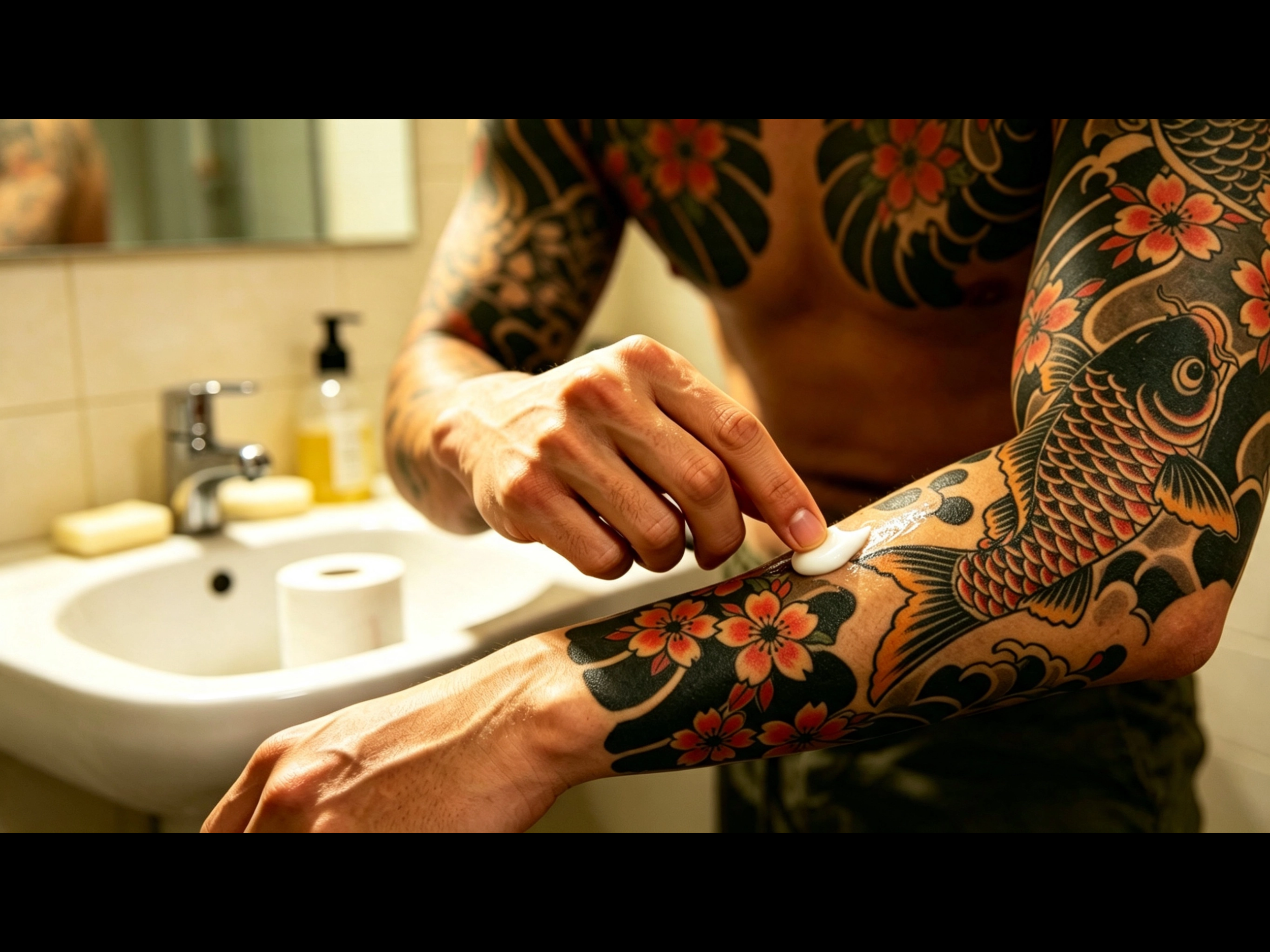
Healing Is Part of the Tattoo.
Taking care of your tattoo is simple, but essential.
Remember that a tattoo is not only a piece of art—it is also a wound that needs the right time to heal. By following these simple instructions, you will help your skin recover properly while allowing your tattoo to maintain its definition, contrast and vibrancy over time.
The instructions below are not simply recommendations; they are an important part of the healing process. Following them carefully will reduce the risk of complications and help preserve the quality of your tattoo for many years to come.
The time and care you dedicate to your tattoo over the next few weeks will directly influence the result you will carry with you for the rest of your life.
A few simple habits and a little attention are all it takes to protect the work that has been done and help your tattoo heal in the best possible way.
THE DAY OF YOUR TATTOO
At the end of your appointment your tattoo will be covered with a protective film.
Leave the dressing on overnight and remove it the following morning.
THE FOLLOWING DAY (Day 1)
🌞 Morning
Wash your hands thoroughly before touching your tattoo.
Carefully remove the protective film.
Wash the tattoo with lukewarm water and neutral soap*.
Gently remove any excess ink, blood or body fluids released overnight.
Pat the tattoo dry using clean paper towels. Avoid fabric towels.
Throughout the day do not apply cream and do not cover the tattoo again with cling film, gauze or any other dressing.
Allowing the skin to breathe promotes proper oxygenation and supports the healing process.
Wear loose, comfortable clothing, preferably cotton, and avoid tight or synthetic fabrics that could irritate the tattoo.
🌙 Evening
Wash your hands again.
Wash the tattoo a second time with neutral soap and water.
Before going to bed, apply a new layer of protective film.
This will help prevent the tattoo from sticking to your pyjamas or bed sheets during the night.
Remove the film the following morning and repeat the washing process as described above.
Important: Never apply tattoo cream underneath the protective film.
DAY 2
Repeat the same routine described for Day 1.
On the evening of the second day, before going to bed, you can reapply the protective film overnight, following the same instructions as on Day 1.
From Day 3 Until Fully Healed
From this point onward, begin your regular healing routine.
Wash your tattoo twice a day (morning and evening) using neutral soap and lukewarm water.
After each wash, apply a thin layer of tattoo aftercare cream*.
✔ Tip
After washing your tattoo, allow the skin to breathe for about 30 minutes before applying the cream.
Continue this routine until the tattoo has fully healed approximately 30 days.
SMALL OR LIGHTLY WORKED TATTOOS
Small or lightly worked tattoos usually heal more quickly.
For the first 2–3 days, simply wash the tattoo with neutral soap and water. Do not apply protective film or cream.
From Day 4, begin the standard aftercare routine described above by applying cream after each wash.
USEFUL INFORMATION
During the healing process, always remember that your tattoo is a wound. Treat it with the same care and attention you would give to any other healing injury.
✔ During the healing process
Wash your tattoo twice a day (three times if you exercise or if it becomes dirty).
Always wash your hands before touching your tattoo.
Keep the tattoo clean and dry.
Wear clean, loose-fitting, breathable clothing, preferably made from natural fibres such as cotton.
For the first 10–15 days, avoid tight clothing that may rub against the tattoo.
Drink plenty of water, especially during the first week. Staying well hydrated helps support your skin throughout the healing process.
🚫 Avoid
Scratching or picking at any scabs.
Direct sun exposure or tanning beds for at least one month.
Sunscreen, hair removal creams or waxing until the tattoo has completely healed.
Wearing jewellery (bracelets, necklaces, etc.) that may rub against the tattoo for at least 2–3 weeks.
Swimming pools, the sea, hot baths, saunas or steam rooms until the tattoo is fully healed.
Dusty environments or contact with materials such as flour, plaster, metal filings or wood dust.
Contact with animal hair or saliva while the tattoo is healing.
🏋 Exercise
You may return to physical activity after 3–4 days, although waiting about a week is recommended whenever possible.
Avoid wearing tight compression or technical sportswear during the first week.
If you practise contact sports or activities where the tattoo may easily become dirty (football, rugby, martial arts, wrestling, etc.), take extra care to protect it.
Always wash your tattoo immediately after training to remove sweat.
ℹ It Is Normal To Experience
Mild redness and swelling during the first 3–4 days.
Itching, even if intense, as the tattoo heals.
Both are completely normal and are part of the natural healing process.
TATTOO AFTERCARE CREAM
There are many tattoo aftercare creams available on the market.
One of the most commonly used is Bepanthenol Tattoo, available at most pharmacies, although you may use any tattoo-specific aftercare cream recommended by your tattoo artist.
Always apply a very thin layer.
Gently massage the cream into the skin until it has been completely absorbed.
Once applied, the cream should become almost invisible. If you can still see a white layer sitting on top of the tattoo, you have applied too much.
Using excessive amounts of cream reduces the skin's oxygen supply, slows down healing and may affect the final appearance of your tattoo.
In some cases, it may also contribute to irritation, infection or a loss of colour and definition.
If you realise that you have applied too much cream, gently remove the excess using a clean paper towel and continue massaging until fully absorbed.
Remember that the cream does not heal your tattoo.
Its purpose is simply to keep the skin soft and moisturised while your body's natural healing process and immune system do the real work.
neutral SOAP
Use a neutral soap, easily available from pharmacies or supermarkets.
Avoid using intimate wash products, as their pH is different and they are not suitable for cleaning a healing tattoo.
My Work Doesn't End When You Leave the Studio
Every tattoo is unique, and every skin heals differently. That's why I like to stay in touch even after your appointment, making sure everything is healing exactly as it should.
If you have any questions during the healing process, special circumstances, or notice anything that concerns you, I recommend contacting me before trying any solutions on your own that could affect the healing of your tattoo.
The same applies if you notice anything unusual during the healing process. Addressing a concern early is often the best way to prevent a small issue from becoming a bigger one.
Even when all aftercare instructions are followed correctly, some tattoos may naturally lose slightly more ink during healing than others. This is one of the normal variations of the healing process and is nothing to worry about.
For this reason, I always offer a post-healing check-up approximately one month after your appointment. If necessary, I'll carry out any required touch-ups free of charge.
Complimentary touch-ups are included within 3 months of your tattoo appointment. After this period, an additional charge will apply.
No question is ever too small when it comes to your tattoo.
I'd much rather answer one extra question today than have to solve a bigger problem tomorrow.
To me, a tattoo is only truly finished once it has fully healed.